Locally made
Someone always ends up wearing the risk when a window, or its glass, doesn’t meet the standard it’s supposed to. Australian window standards exist to stop that risk being left to chance: AS2047 covers the window and door system as a whole, and AS1288 covers the glass. Knowing what each one actually requires is the first step to making sure a failed inspection, or an underperforming product, isn’t your problem to solve. The NCC is adopted through state and territory building legislation, failure to comply with referenced standards such as AS2047 can create legal exposure through certification refusal, rectification orders, contractual disputes, liability claims, or enforcement action.
AS 2047 is Australia’s mandatory standard for windows and external glazed doors. It’s referenced by the National Construction Code (NCC), and compliance is not optional – every window and door in an external wall must pass a suite of five laboratory tests before it can legally be installed in an Australian building. These tests simulate the real forces a window faces: wind pressure, rain, air leakage, and structural loading. To comply with AS2047, a product must pass all five tests. Failing just one test means the product fails the standard entirely. AS2047 exists to protect occupants, buildings and public safety.
AS2047 applies to all external windows and glazed doors supplied in Australia, regardless of where they are manufactured. Visual appearance does not indicate compliance — only testing does.
AS1288 is the Australian Standard for glass in buildings. It covers human impact safety and how much wind and structural load a piece of glass can take before it fails. Where AS2047 governs the window frame and hardware, AS1288 governs the glass itself, so a compliant frame still needs compliant glass to meet the full standard.
The current edition, AS1288-2021, sharpened requirements around glazing selection and human impact safety. Glass specification has moved on since earlier versions, and the standard has moved with it. What does AS1288 mean for glass and glazing in practice? Every pane has to be selected for its specific application, not just cut to size, with wind loading, impact risk and location factored in before it goes into a frame.
AS1288 glass compliance comes down to one thing: does the selection hold up in the exact spot it’s installed? A pane rated for a low-impact internal partition isn’t automatically safe for a floor-to-ceiling window in a cyclone-rated wind zone, even inside a fully compliant AS2047 frame. The frame can carry full certification and still fail on the glazing if the glass itself wasn’t selected for that application. Compliance only holds when both standards are satisfied together.
Before signing off on any window or door supplier, ask for four things upfront:
None of this is unusual to ask for. A supplier confident in its compliance will have it ready without delay. Ask for it upfront, before the order is placed. A&L tests to AS2047 in its own NATA-accredited facility. For builders, the moment that matters most is handover. A non-compliant window becomes a defect that can result in occupancy and certificate delays; increased insurance scrutiny and warranty complications, as well as costly defect liability and remediation. Windows that carry AS2047 certification are the ones that hold up to scrutiny, long after installation.
Every standard covered here exists for one reason: so a window or its glass performs the way it’s supposed to.
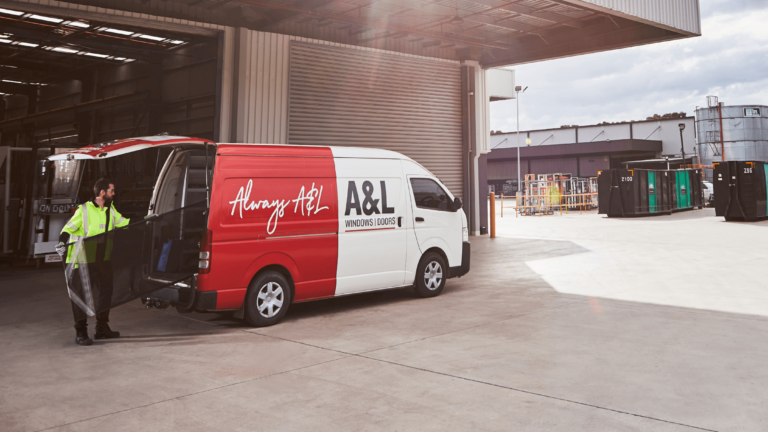
That’s why you want to choose reputable suppliers, who design products in Australia for Australian conditions, test their products to local standards, have local teams to support and service; and back products with market-leading warranties. To see what that looks like in practice at A&L, visit the Always Australian page.